
Europe has produced some of the greatest footballers in history, and behind many of those players are academies that helped shape their careers.
From Barcelona’s famous La Masia to Ajax’s renowned youth system, European football academies have become recognised worldwide for developing exceptional talent. Some have created generations of first-team players, while others have built reputations for discovering young footballers and helping them reach Europe’s biggest leagues.
But what makes a football academy successful? Is it the number of professional players it produces, the opportunities it creates or the philosophy behind its development system?
We take a look at 10 of the best football academies in Europe, exploring what makes each one distinctive and the players who have emerged from their ranks.

Few football academies have influenced the modern game quite like Barcelona’s La Masia.
The academy became synonymous with Barcelona’s golden generation, producing Lionel Messi, Xavi Hernández, Andrés Iniesta, Sergio Busquets and Gerard Piqué. Together, these players helped establish one of the most successful periods in the club’s history.
What makes La Masia particularly remarkable is its footballing identity. Young players learn to understand space, movement and possession within a system that runs throughout the club.
Barcelona’s commitment to developing homegrown talent has continued into recent years, with Lamine Yamal emerging as another outstanding example of the academy’s ability to produce world-class players.
La Masia remains one of the most recognisable names in youth football and an example of how a consistent playing philosophy can shape an entire generation.
Ajax’s reputation extends far beyond the trophies won by its first team. The Amsterdam club has spent decades developing players who have influenced football across Europe.
Johan Cruyff, Dennis Bergkamp, Clarence Seedorf and Matthijs de Ligt are among the many players to emerge from Ajax’s youth system.
The academy is closely associated with the Dutch concept of Total Football, where players are encouraged to understand the game beyond the responsibilities of a single position.
Ajax has also built a reputation for trusting young players in senior football. Rather than relying exclusively on established stars, the club has regularly provided academy graduates with opportunities to compete at the highest level.
That willingness to develop and promote young talent has made Ajax one of Europe’s most influential football academies.
Benfica has established one of Europe’s most productive youth systems at its academy in Seixal, near Lisbon.
Bernardo Silva, Rúben Dias, João Félix, João Neves and Gonçalo Ramos are among the notable players to have developed through Benfica’s ranks.
The Portuguese club has become particularly successful at identifying promising footballers, introducing them to senior competition and helping them establish careers at major European clubs.
Benfica’s success is reflected not only in the players who represent its first team but also in the significant transfer fees generated by academy graduates.
The club demonstrates how a strong development system can become central to both sporting success and a sustainable football business.
Sporting CP has a remarkable history of developing attacking talent, most famously Cristiano Ronaldo and Luís Figo.
Both players spent important stages of their youth careers at Sporting before becoming two of Portugal’s most celebrated footballers.
The club’s academy, based in Alcochete, has also helped develop players such as Nani and João Moutinho.
Sporting’s reputation is closely linked to its ability to recognise individual talent and provide young footballers with opportunities to establish themselves in senior football.
The academy has played an important role in Portuguese football for decades, helping maintain the country’s reputation for producing technically gifted and creative players.
Clairefontaine is different from most of the academies on this list.
Rather than belonging to a professional football club, the Institut National du Football de Clairefontaine forms part of France’s national youth development system.
Located near Paris, the centre brings together selected young footballers from the surrounding region, allowing them to receive specialist training while continuing their education.
Thierry Henry and Kylian Mbappé are among the most recognisable names to have attended Clairefontaine during their youth careers.
Its influence extends beyond individual players. Clairefontaine has become an important symbol of France’s wider approach to identifying and developing young talent.
The centre demonstrates the value of investing in youth football at a national level, rather than relying entirely on individual clubs.
Manchester United’s academy holds a special place in English football history.
The club’s famous Class of ’92 produced David Beckham, Ryan Giggs, Paul Scholes, Nicky Butt and Gary and Phil Neville, several of whom became central figures in Manchester United’s most successful era.
That generation helped establish the academy’s reputation for producing players capable of performing under the pressure of representing one of the world’s biggest football clubs.
The tradition has continued through players such as Marcus Rashford and Kobbie Mainoo, who progressed through United’s youth ranks to reach the first team.
Manchester United’s academy remains closely associated with its commitment to developing homegrown players and providing a pathway into senior football.
Athletic Club’s academy at Lezama is one of the most distinctive in European football.
Unlike most major clubs, Athletic operates under a long-established philosophy centred on players who are born or developed in the Basque Country.
This approach makes youth development especially important. Rather than recruiting freely from across the world, the club depends heavily on its regional football network and academy structure.
Players such as Iker Muniain, Iñaki Williams and Nico Williams have progressed through Lezama to become important figures for Athletic.
The academy’s success is particularly impressive given the club’s recruitment philosophy. It demonstrates how a strong local identity and long-term commitment to developing players can allow a club to compete at the highest level.
Olympique Lyonnais has developed an impressive reputation for producing players who establish successful careers in French and European football.
Karim Benzema is perhaps its most famous graduate, having progressed through Lyon’s youth system before becoming one of the world’s leading strikers.
Alexandre Lacazette, Corentin Tolisso and Nabil Fekir also developed at Lyon before establishing themselves in senior football.
The academy has been particularly important to the club’s identity, providing a steady supply of young players capable of contributing to the first team.
Lyon’s success shows how a club can build its reputation around developing local talent and giving young footballers meaningful opportunities to progress.
Croatia’s international success has often drawn attention to the country’s ability to produce outstanding footballers despite its relatively small population.
Dinamo Zagreb has played a major role in that reputation.
Luka Modrić, Mateo Kovačić and Joško Gvardiol all spent important stages of their development within Dinamo’s youth system.
The club has become an important stepping stone for talented Croatian players, providing opportunities to gain senior experience before moving to larger European leagues.
Dinamo’s record is especially impressive considering the financial resources available to many of its competitors.
Its academy demonstrates that producing elite footballers is not limited to Europe’s wealthiest clubs.
Red Bull Salzburg has become an important destination for emerging young footballers looking to establish themselves in European football.
The club’s wider development structure includes FC Liefering, which provides a route into senior competition for promising players.
Footballers such as Konrad Laimer, Xaver Schlager and Dominik Szoboszlai have progressed through the Red Bull development system.
Salzburg’s approach differs from more traditional academies. Its wider football structure places considerable importance on identifying young talent, providing competitive opportunities and helping players progress towards higher levels of the game.
The academy has contributed to Salzburg’s reputation as a club capable of developing players who go on to compete in major European leagues.
While many of Europe’s most famous academies operate within professional football clubs, they are not the only option available to aspiring young players.
Professional club academies typically recruit through scouting networks and highly selective processes, meaning opportunities to join can be extremely limited.
Independent football academies provide a different pathway for players who want to continue their development in a dedicated football environment.
Established in 2007, FCV International Football Academy offers residential football programmes for UK and international students at Grace Dieu Manor Park in Leicestershire, England.
Players benefit from structured coaching, competitive football, dedicated training facilities and residential accommodation, with programmes designed around different footballing and educational ambitions.
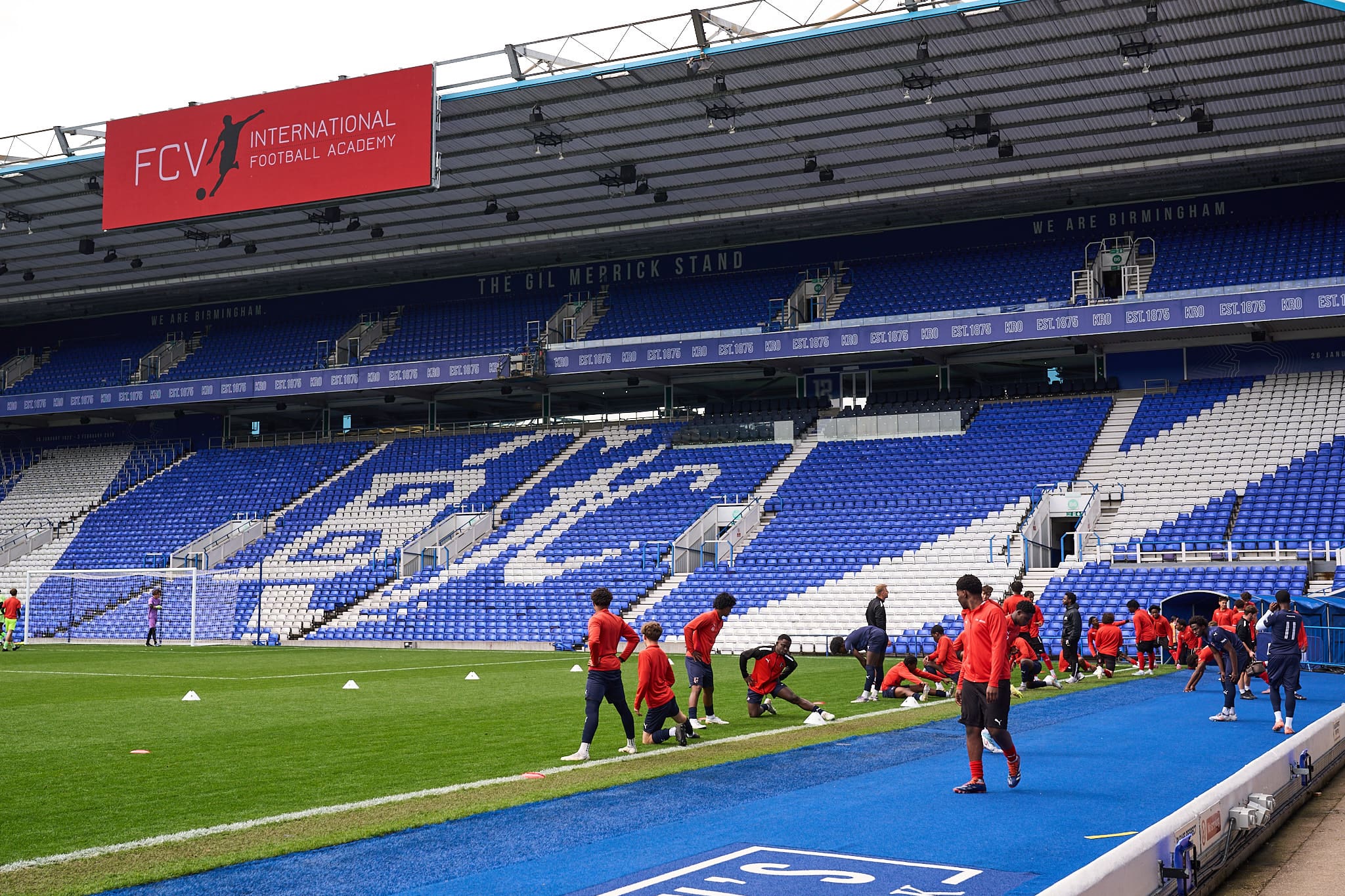
For students who want to continue their studies alongside football, FCV offers opportunities to combine training with academic qualifications.
Programmes include BTEC qualifications, A Levels and degree-level study through education partnerships, allowing players to work towards qualifications while continuing their football development.
Find out more about Football with Education.
FCV’s Elite Football Programme offers aspiring footballers aged 15–23 the opportunity to experience a dedicated football environment in England.
Players can join for shorter periods or a full season, benefiting from regular coaching, competitive matches and individual development opportunities.
FCV also organises opportunities for players to showcase their abilities, although progression into professional football is not guaranteed.
The academies featured in this article have achieved success in different ways, but the most famous name is not necessarily the best option for every young footballer.
Professional club academies such as Barcelona, Ajax and Manchester United are highly selective and generally recruit players through established scouting systems.
For aspiring players exploring their options, there are several important factors to consider:
Understanding these differences can help young footballers and their families make informed decisions.
Europe’s leading football academies have shaped generations of talented players, from Lionel Messi at Barcelona to Cristiano Ronaldo at Sporting CP and Luka Modrić at Dinamo Zagreb.
Their success demonstrates the importance of creating environments where young footballers can develop and progress.
However, there is no single route into football. While some players are recruited into professional club academies at an early age, others continue their development through independent programmes, education and competitive football.
For those interested in training and studying in England, contact FCV International Football Academy to learn more about the programmes available.


