
The world’s best soccer academies have played a major role in developing some of football’s greatest players. From Barcelona’s La Masia to the youth systems of Brazil and Argentina, these academies have helped young talents progress into professional football and compete at the highest level.
But what makes a great soccer academy? While famous graduates are an important measure of success, the quality of coaching, player development, facilities and opportunities to progress into senior football are equally significant.
In October 2026, the CIES Football Observatory published its latest global assessment of football training clubs, placing Benfica, River Plate and Boca Juniors among the world’s leading producers of professional players.
Here, we explore 15 of the best soccer academies in the world, highlighting their histories, notable graduates and contributions to the development of professional football.
This is a selection of leading academies rather than a ranking from first to fifteenth.

Few soccer academies have influenced the modern game as significantly as Barcelona’s La Masia.
Its reputation was established through an extraordinary generation featuring Lionel Messi, Xavi Hernández, Andrés Iniesta and Sergio Busquets, who became central figures in Barcelona’s success.
The academy’s identity is closely connected to Barcelona’s style of football, with an emphasis on possession, intelligent movement and understanding space.
More recently, players such as Lamine Yamal, Gavi and Pau Cubarsí have demonstrated the continuing importance of La Masia to Barcelona’s first team.
Benfica has established one of the most productive youth development systems in world football.
Based at the Benfica Campus in Seixal, the club has developed players including Bernardo Silva, Rúben Dias, João Félix, João Neves and Gonçalo Ramos.
Its academy has become particularly successful at preparing young players for senior football, both within Portugal and across Europe’s leading leagues.
In October 2026, Benfica topped the CIES Football Observatory’s global training club ranking, with 93 academy-trained players competing across the 49 leagues analysed.
Ajax’s academy, De Toekomst, has a history closely associated with the development of Dutch football.
Johan Cruyff, Dennis Bergkamp, Clarence Seedorf and Matthijs de Ligt are among the many players who progressed through the club’s youth system.
Ajax is particularly recognised for developing footballers who are comfortable in possession and capable of understanding different roles within a team.
The academy’s influence extends beyond the players it produces, with its approach to youth development inspiring clubs and coaches around the world.
River Plate has developed generations of players who have gone on to achieve success in Argentina and abroad.
Its former academy players include Pablo Aimar, Javier Mascherano, Gonzalo Higuaín and Julián Álvarez.
The Buenos Aires club has a strong tradition of giving talented young players opportunities to progress towards its senior team.
River Plate was ranked second globally in the CIES Football Observatory’s October 2026 assessment, reflecting the number of its graduates playing professional football and the level at which they compete.
Sporting CP has one of Portugal’s most recognisable football development systems.
Cristiano Ronaldo and Luís Figo are two of its most celebrated former youth players, while Nani and João Mário also progressed through the club’s academy.
Sporting’s reputation is built on identifying promising young footballers and preparing them for the demands of professional football.
Its continued production of players for the Portuguese national team and leading European clubs has helped establish the academy as one of the country’s most important football institutions.
Boca Juniors is one of South America’s most famous football clubs, with a youth system that has produced numerous international players.
Carlos Tevez, Fernando Gago, Leandro Paredes and Nahuel Molina are among the footballers who developed through Boca’s academy.
The club’s strong connection with Argentine football culture provides a distinctive environment for young players aspiring to represent the senior team.
In 2026, Boca Juniors placed third in the CIES Football Observatory’s worldwide ranking of training clubs, underlining its continued contribution to professional football.
Santos holds a special place in football history thanks to its association with Pelé, one of the greatest players the sport has ever seen.
Decades later, Neymar emerged through the club’s youth system before establishing himself as an international star.
Santos has long been associated with the development of exciting attacking players, with its academy providing an important pathway for young Brazilian talent.
Its history illustrates the role that Brazilian clubs have played in shaping football far beyond South America.
Real Madrid’s academy, commonly known as La Fábrica, has produced numerous players who have enjoyed successful careers at the club and elsewhere.
Raúl, Iker Casillas and Dani Carvajal are among its most recognisable graduates, while Achraf Hakimi also spent important developmental years in the club’s youth system.
Although Real Madrid is famous for signing established international stars, its academy remains a significant source of professional footballers.
La Fábrica provides a pathway into Real Madrid’s reserve and senior teams, while many graduates continue their careers with other clubs across Spain and Europe.
Flamengo has developed some of Brazil’s most exciting players in recent years.
Vinícius Júnior and Lucas Paquetá both emerged through the Rio de Janeiro club’s youth system before moving into European football.
The academy operates within one of Brazil’s largest football institutions, where young players grow up surrounded by the expectations and passion associated with Flamengo.
Its ability to develop players who progress into major international competitions has strengthened its reputation as one of South America’s leading academies.
Dinamo Zagreb has played an important role in the development of Croatian football.
Luka Modrić, Mateo Kovačić and Joško Gvardiol all spent formative periods within the club’s youth system before establishing themselves at the highest level.
The academy has consistently developed players who progress into major European leagues, despite operating in a smaller domestic football market than many of its competitors.
Dinamo’s contribution to Croatia’s international success demonstrates the influence that a well-established youth development structure can have on a national football team.
Vélez Sarsfield may not have the same international profile as River Plate or Boca Juniors, but its academy has a strong reputation within Argentine football.
The club has developed players such as Nicolás Otamendi, Thiago Almada and Ricardo Álvarez.
Its youth system has been an important source of players for both its senior team and clubs overseas.
Vélez’s inclusion among the leading clubs in the CIES Football Observatory’s 2026 global assessment highlights the strength of player development beyond Argentina’s two most internationally recognised clubs.
Manchester United’s academy is closely connected to the club’s history and identity.
The famous Class of ’92 included David Beckham, Paul Scholes, Ryan Giggs, Gary Neville, Phil Neville and Nicky Butt, who went on to play important roles in one of the club’s most successful periods.
More recent academy graduates include Marcus Rashford, Scott McTominay and Kobbie Mainoo.
Manchester United’s long tradition of developing homegrown players has helped maintain the academy’s importance across different generations of the club.
Uruguay has a remarkable history of producing professional footballers relative to its population, and Defensor Sporting has made a significant contribution to that success.
The Montevideo club has developed players including Giorgian de Arrascaeta and Sebastián Abreu.
Defensor Sporting is particularly notable for its ability to prepare young footballers for professional careers in Uruguay and overseas.
Its appearance among the world’s top ten training clubs in the October 2026 CIES assessment demonstrates why successful academies are not limited to Europe’s wealthiest teams.
Olympique Lyonnais has developed some of France’s most accomplished footballers.
Karim Benzema, Alexandre Lacazette, Samuel Umtiti and Corentin Tolisso all progressed through Lyon’s youth system.
The club has a history of integrating academy graduates into senior football, providing young players with opportunities to establish themselves professionally.
Lyon’s success has helped reinforce France’s reputation as one of the world’s leading countries for football development.
Red Star Belgrade has a long history of developing footballers who go on to compete across Europe.
Its academy has played an important role in Serbian football, with graduates including Nemanja Radonjić and Luka Jović, who spent part of his youth development at the club.
Red Star’s youth system provides a route into professional football in Serbia, while also producing players who progress into larger European leagues.
The club’s inclusion in the CIES Football Observatory’s 2026 global top ten reflects its continued contribution to the development of professional players.
Although the academies listed above operate in different countries and footballing environments, several characteristics contribute to their success.
Successful academies typically provide experienced coaching, structured player development, competitive matches and opportunities for talented footballers to progress into senior teams.
However, it is important to understand that the academies of major professional clubs are generally recruitment-based. Young players are typically identified through scouting networks rather than enrolling through a standard application process.
For aspiring footballers who are not already part of a professional club’s youth system, independent football academies can offer a different route to structured training and development.
While many of the world’s best-known soccer academies operate within professional football clubs, FCV International Football Academy provides a different opportunity for aspiring players.
Established in 2007, FCV is an independent residential football academy based at Grace Dieu Manor Park in Leicestershire, England.
The academy welcomes players from the UK and around the world, providing structured football coaching, competitive fixtures and opportunities to combine football development with education.
Players train under UEFA-qualified coaches and benefit from facilities including full-size and seven-a-side 3G pitches, a gym, swimming pool and on-site accommodation.
FCV also organises showcase opportunities, allowing players to demonstrate their abilities in competitive environments. Former students have progressed into professional football, university education and other sporting pathways.
Unlike professional club academies, which generally recruit players through their own scouting systems, FCV offers programmes that prospective students can apply to directly.
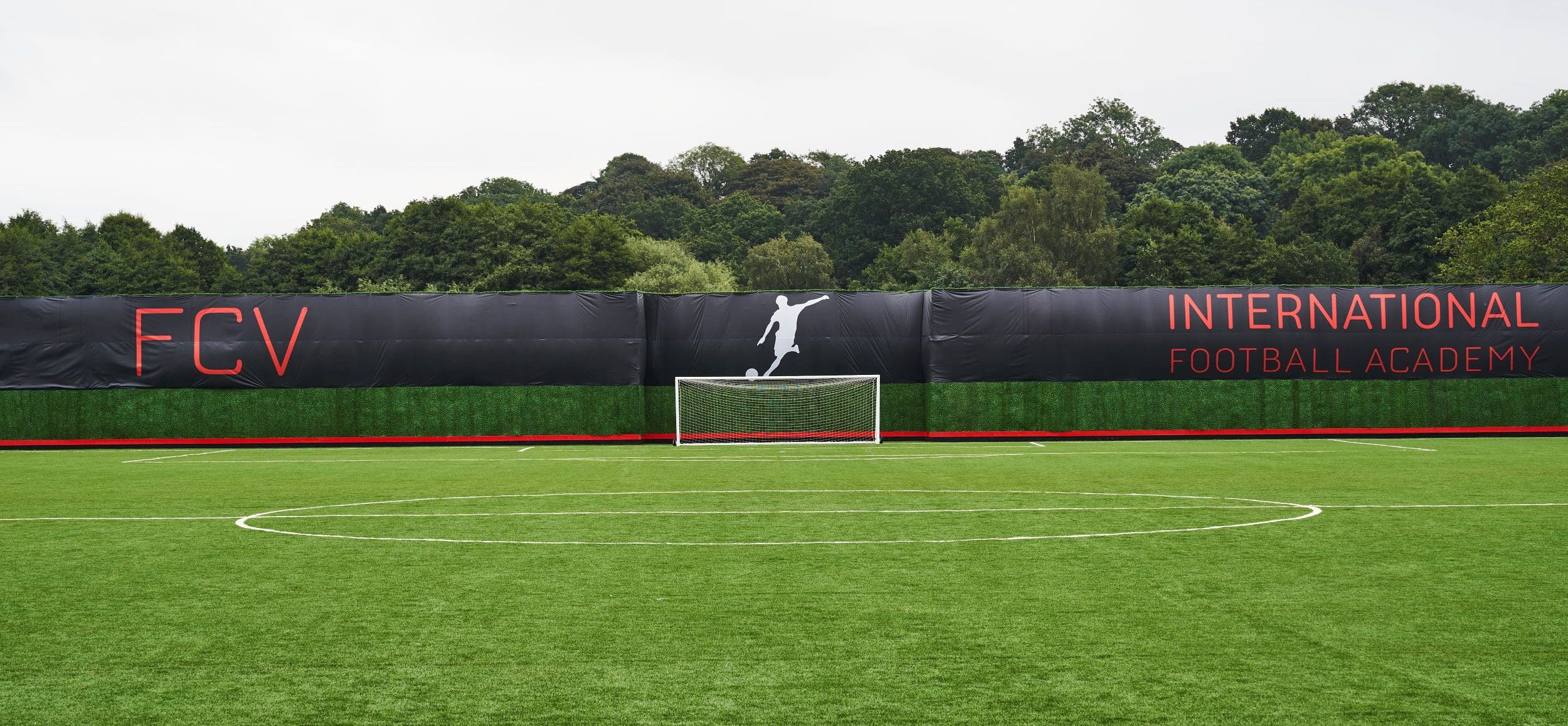
FCV offers several pathways depending on a player’s age, ambitions and educational requirements. The Football with Education programme combines regular football training and competitive matches with academic study, including BTEC qualifications, A Levels and degree-level opportunities. Players who want to concentrate primarily on their football development can explore the Elite Football Programme, while shorter experiences are available through Football Summer Camps.
Players interested in joining FCV can contact the academy directly to discuss the available programmes and their individual goals.
The admissions team can provide information about programme suitability, entry requirements, accommodation and the enrolment process.
Prospective students and families can also arrange an online meeting to discuss their options before making a decision.
Find out more about the FCV admissions process or contact the academy to enquire about joining.
The best soccer academy for an individual player depends on their age, ability, ambitions and circumstances.
Professional club academies such as Barcelona, Benfica, Ajax and River Plate have outstanding histories of developing elite footballers, but places within their youth systems are highly competitive.
For players seeking structured coaching, competitive football and educational opportunities in a residential setting, an independent academy such as FCV may provide a more suitable option.
Whatever pathway a player chooses, consistent development, commitment and access to the right opportunities remain essential to progressing in football.


