Improving your football skills takes more than simply playing matches. Regular football training drills can help you develop better ball control, passing accuracy, speed, fitness and tactical awareness, giving you the confidence to perform more consistently on the pitch.
Whether you’re an aspiring academy player or looking to improve your game, incorporating a variety of football training exercises into your routine is an effective way to develop your overall ability.
Below are five practical football drills and training methods you can use to improve different aspects of your performance.

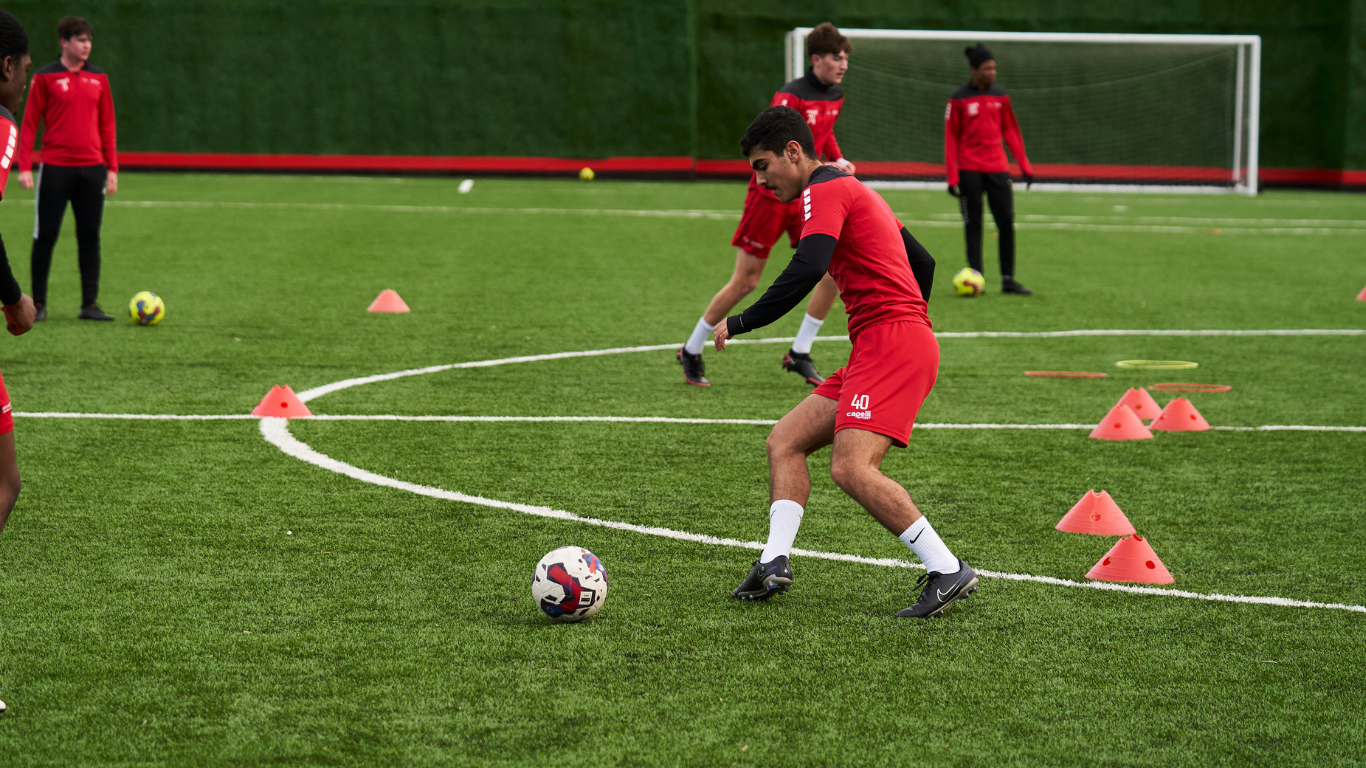
Good ball control is essential for footballers in every position. Being comfortable with the ball at your feet allows you to move confidently, retain possession under pressure and react quickly when facing opponents.
Regular dribbling exercises can help improve your first touch, coordination and ability to change direction while maintaining possession.
How to perform the drill:
Start slowly and concentrate on keeping the ball close. As you become more confident, reduce the distance between the cones or practise using your weaker foot.
Mark out a small training area and practise moving the ball around using short touches. Change direction regularly, alternating between your left and right foot.
Try to keep your head up between touches rather than constantly looking down at the ball. This will help you develop the awareness needed to identify teammates, opponents and available space during matches.
Training tip: Focus on maintaining control before increasing speed. Practising with both feet will also help you become a more versatile player.
If you’re training without teammates, explore our solo football drills for more individual exercises you can practise independently.
Football involves repeated changes in pace, from jogging and walking to accelerating, sprinting and recovering between high-intensity movements.
Developing your speed and stamina can help you maintain your performance throughout a match and recover more effectively between demanding passages of play.
Interval training is a useful way to practise these changes in intensity.
How to perform the drill:
The intensity and number of repetitions should reflect your age, fitness and training experience. Focus on maintaining good running technique rather than completing every repetition at maximum speed.
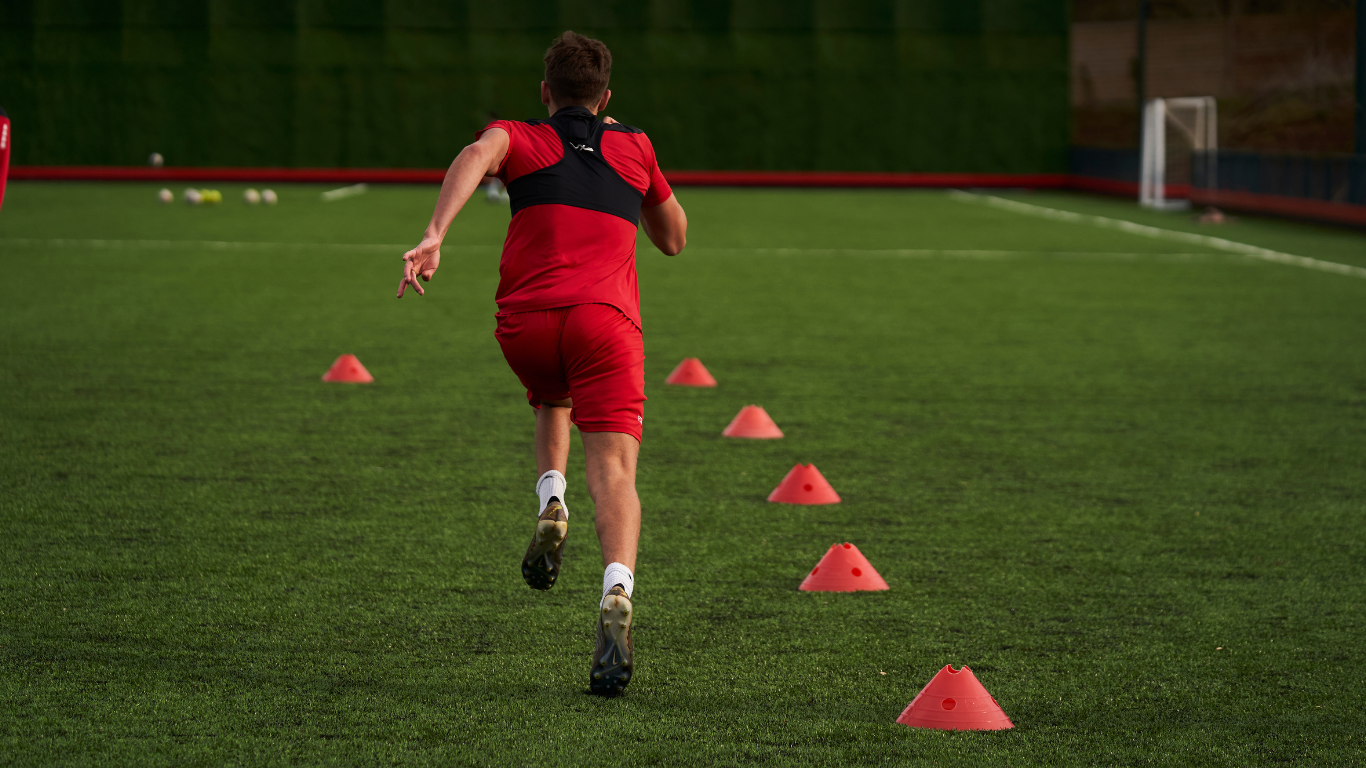
Shuttle runs introduce acceleration, deceleration and changes of direction into your fitness training.
Place two cones approximately 10 metres apart. Sprint from one cone to the other, turn under control and return to your starting position.
As you become more comfortable, vary the distances and recovery periods to challenge different aspects of your fitness.
For more exercises focused on footwork and changing direction, read our guide to football agility drills.
Training tip: Allow sufficient recovery between demanding sessions. Quality movement and consistency are more important than simply completing as many sprints as possible.
Accurate passing is one of the most important technical skills in football. Whether you’re playing a short pass in midfield, switching play or creating a goalscoring opportunity, your ability to deliver the ball accurately can influence the outcome of a match.
Passing exercises help improve your technique, first touch and ability to control the speed and direction of the ball.
How to perform the drill:
If one-touch passing is too difficult initially, use two touches: one to control the ball and another to make the pass.
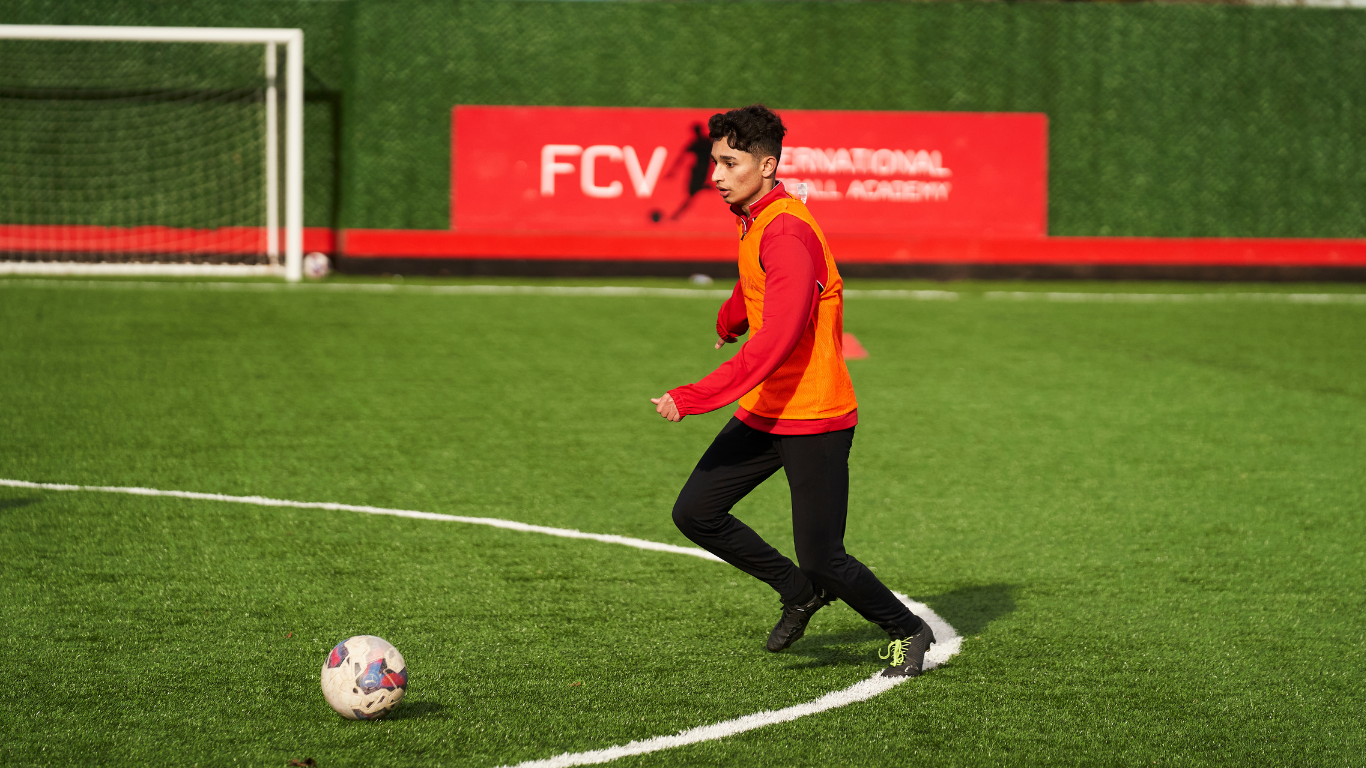
Set up two cones to create a small target area.
From a suitable distance, attempt to pass the ball accurately between the cones. Record how many successful passes you complete out of ten attempts.
Repeat the exercise with your weaker foot, then gradually narrow the target or increase the passing distance.
This gives you a simple way to measure your progress over time.
Training tip: Pay attention to your standing foot, body position and follow-through. Accurate passing comes from consistent technique, not simply striking the ball harder.
For more advanced exercises, including triangle passing, long passing and passing under pressure, explore our football passing drills.
Football requires players to maintain their balance while turning, accelerating, jumping and competing for possession.
Developing core strength and stability can support better movement control and help you remain balanced when changing direction or receiving the ball under pressure.
These simple exercises can complement your regular football training.
Start in a forearm plank position, keeping your body in a straight line from your shoulders to your heels.
Engage your abdominal muscles and avoid allowing your hips to drop.
Hold the position for approximately 20–30 seconds, or for as long as you can maintain good technique. Rest before repeating.
As your strength develops, gradually increase the duration rather than sacrificing your posture.
How to perform the drill:
This exercise combines stability, coordination and ball control.
Sit with your knees bent and feet on the ground. Keeping your back in a comfortable, upright position, rotate your upper body slowly from side to side.
Perform the movement with control rather than rushing through repetitions.
Training tip: Focus on correct technique and controlled movements. Strength and balance exercises should support your football training, not leave you excessively fatigued before matches.
Football training isn’t only about physical fitness and technical ability. Understanding positioning, movement and decision-making is equally important when developing as a player.
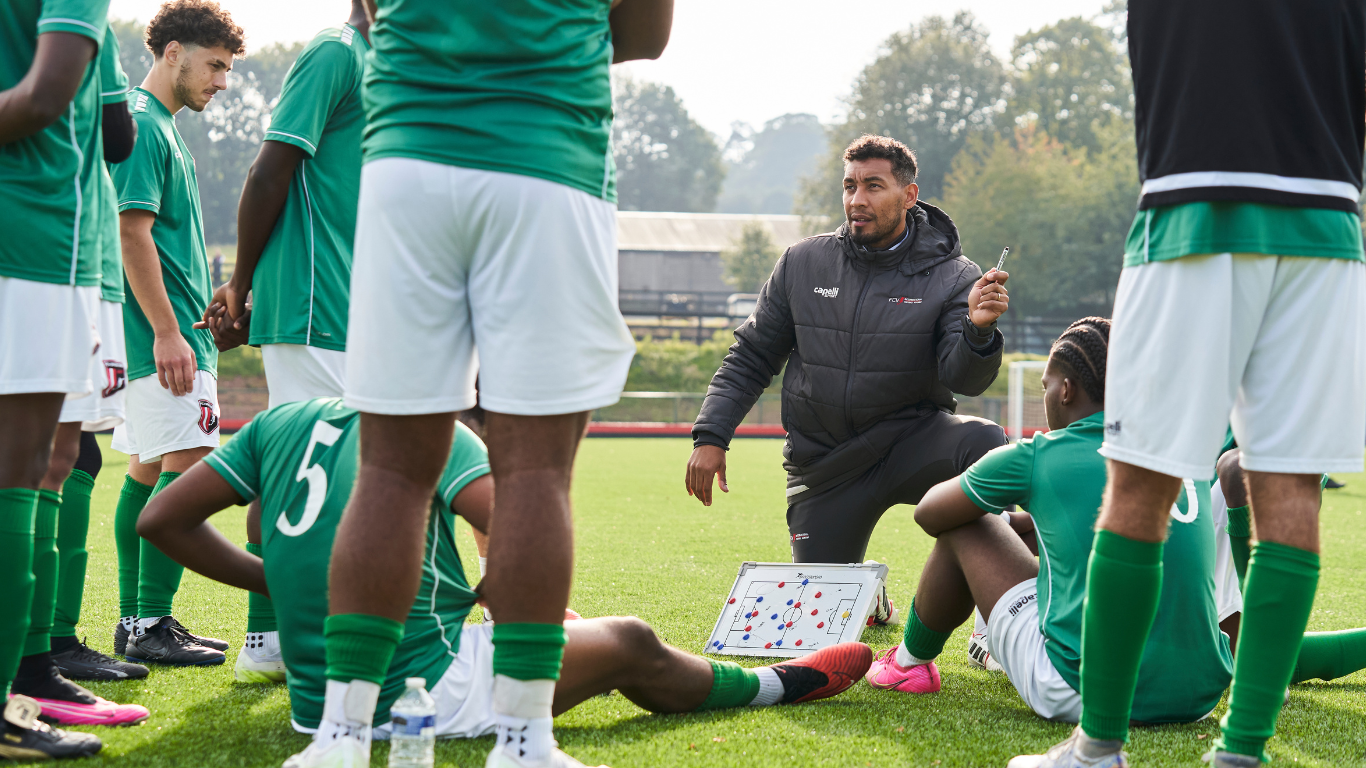
Tactical awareness helps you recognise space, anticipate opposition movements and make better decisions both on and off the ball.
One useful training exercise involves analysing professional matches or reviewing recordings of your own performances.
How to perform the exercise:
For example, a midfielder might focus on scanning before receiving a pass, while a defender might study positioning and when to apply pressure.
If recordings of your matches are available, review selected passages of play and consider:
Choose one specific area to work on rather than trying to change everything at once.
Training tip: Try to apply what you’ve observed in a practical training session or match. Tactical understanding becomes more valuable when you can put it into action.
The best football training routines combine technical exercises, physical conditioning and opportunities to apply your skills in realistic match situations.
To make your training more effective:
Most importantly, focus on the quality of your training. Each exercise should have a clear purpose and contribute to an area of your game you want to improve.
Individual football training drills can help you develop important skills, but structured coaching and regular competitive football provide further opportunities to put those abilities into practice.
At FCV International Football Academy in England, aspiring footballers can develop their technical skills, tactical understanding and physical performance through training led by UEFA-qualified coaches.
Our Elite Football Programme combines structured coaching with competitive match opportunities, helping players develop in a dedicated football environment.
Explore the Elite Football Programme at FCV